


Glaucoma: an introduction
Worried about what glaucoma is and what that means for you? Here's our guide to the different types, how testing identifies them, and how treatments differ — The Eye Surgery is a specialist glaucoma centre.
Worried about what glaucoma is and what that means for you? Here's our guide to the different types, how testing identifies them, and how treatments differ — The Eye Surgery is a specialist glaucoma centre.
The Different Types of Glaucoma — and Why the Type Affects What Can Be Done
Most people who have been told they have glaucoma think they understand what that means. Pressure in the eye. Drops to bring it down. Monitoring to make sure it is not getting worse. Perhaps eventually an operation.
That picture is accurate for some types of glaucoma. For others it is incomplete. And for at least one type, it is actively misleading — because that type of glaucoma progresses even when the pressure is in the normal range.
Glaucoma is not one disease. It is a group of conditions that share a common endpoint — damage to the optic nerve — but arrive there through different mechanisms. The type matters because the mechanism affects what needs to be managed, and how.
What all glaucoma has in common
Glaucoma causes damage to the optic nerve — the structure that carries visual information from the eye to the brain. As nerves are lost, the visual field shrinks. Peripheral vision is affected early. Central vision is usually preserved until late in the disease. This progression is typically painless and slow enough that many people do not notice it until significant damage has already occurred.
The damage is irreversible. Nerves that are lost cannot be restored. This is the reason early detection and active management matter — not to reverse what has happened, but to protect against losing more.
Glaucoma is the leading cause of irreversible blindness worldwide. The majority of people who have it do not know — because it produces no symptoms in its early stages.
Primary open-angle glaucoma
Primary open-angle glaucoma is the most common form in Western populations. The drainage system of the eye — the trabecular meshwork, through which aqueous fluid normally exits — functions inefficiently. Fluid drains too slowly. Eye pressure rises. That raised pressure is transmitted to the optic nerve and, over time, causes progressive nerve loss.
The treatment focus is on lowering eye pressure — the primary modifiable risk factor for progression. This can be achieved with laser treatment, drops, and surgery. The goal is stopping damage. This does not happen at any specific pressure reading, each patient needs ongoing testing and assessments on their own personal scale.
Normal tension glaucoma
Normal tension glaucoma is a form of glaucoma in which the characteristic optic nerve damage and visual field loss occur despite eye pressure that sits within the normal range. It is more common than many patients realise — estimates suggest it accounts for between 40% and 75% of all open-angle glaucoma, depending on the population studied.
The existence of normal tension glaucoma is one of the most important reasons why a raised pressure reading alone is not sufficient for glaucoma diagnosis or monitoring — and why a normal pressure reading does not exclude it.
In normal tension glaucoma, factors beyond intraocular pressure — genetic, vascular, or structural, — are thought to contribute to optic nerve vulnerability. Management still focuses on pressure lowering: reduction of intraocular pressure slows progression even in the normal range.
Angle closure glaucoma
Angle closure glaucoma occurs when the drainage angle of the eye — the space where fluid exits — becomes narrowed or blocked. This can happen gradually, or sometimes suddenly— which is a medical emergency, producing severe pain, rapid vision loss, nausea, and a dramatically raised eye pressure that requires urgent treatment. A specific type of laser treatment is required for angle closure glaucomas, and correctly identifying whether an eye’s drainage angle is open or closed is key to correct patient care.
Secondary glaucoma
Secondary glaucoma occurs when an identifiable cause produces raised intraocular pressure and subsequent optic nerve damage. The causes are varied — previous eye injury, prolonged use of steroid eye drops, inflammation within the eye (uveitis), or conditions such as pigment dispersion syndrome or pseudoexfoliation where the drainage system gets blocked. Secondary glaucoma is managed by addressing the primary cause where possible, alongside pressure lowering.
What this means for treatment
The type of glaucoma determines the priority in treatment. There are many types of glaucoma and many types of treatments for glaucoma. Careful identification of the type of glaucoma determines the strategy for treatment. Ongoing testing and picking up changes earlier makes care more successful in preserving vision.
Glaucoma treatment is a rapidly evolving field. New procedures have been introduced over recent years and new approaches continue to emerge in the published literature.
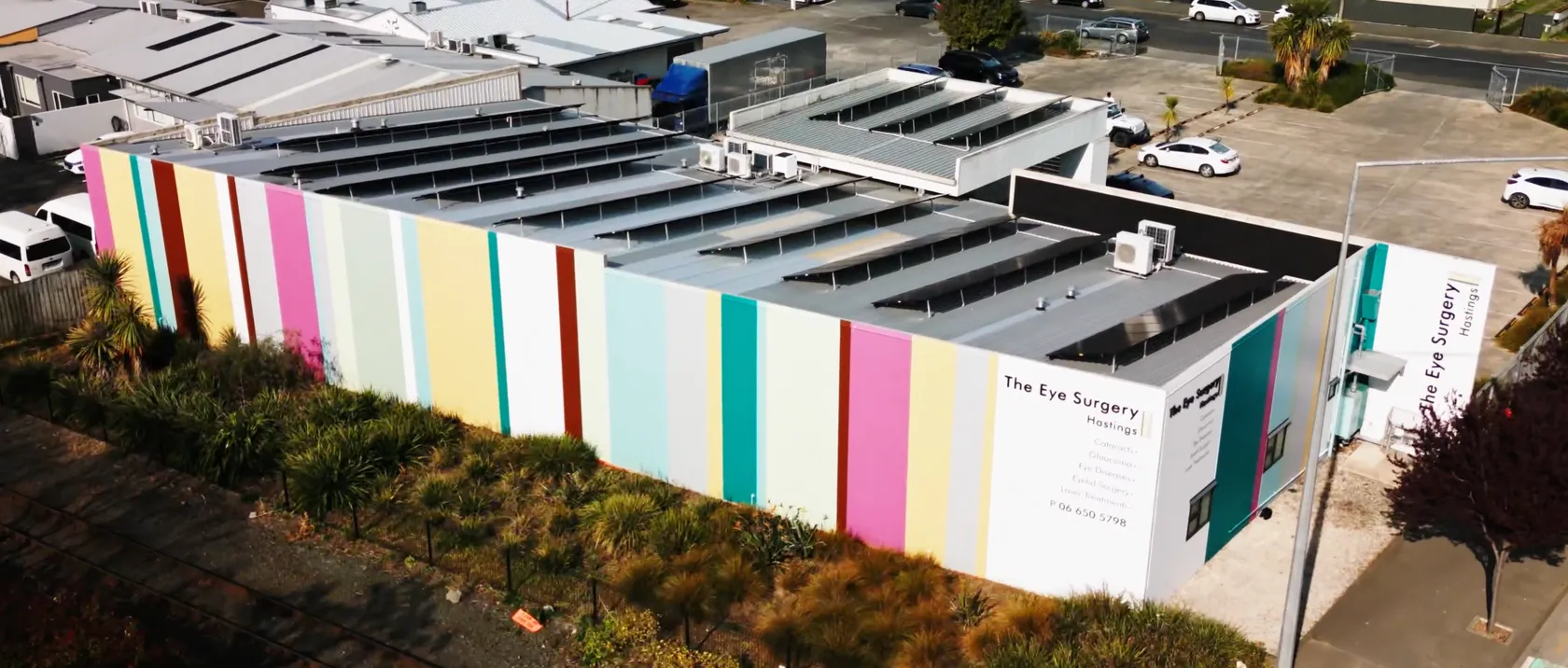
The Eye Surgery Hastings is a specialist glaucoma practice, has advanced testing equipment, and has the full range of glaucoma treatments available on-site, has introduced glaucoma surgeries to New Zealand, and worked with insurance companies to make these available across New Zealand.
Its imaging devices have been used to create a teaching website for medical professionals, www.glaucoma4k.org, which has been viewed from over 100 countries.
Precision care that's personal.