Sustainability: our award-winning strategies
Do you think green has to mean a compromise on quality? More effective, less cost and less harm are the standards we set ourselves — and these have led to international prizes.
Do you think green has to mean a compromise on quality? More effective, less cost and less harm are the standards we set ourselves — and these have led to international prizes.
WHAT DOES IT MEAN THAT YOUR EYE SURGERY IS CARBON POSITIVE
Most people assume that doing things in an environmentally responsible way involves a trade-off. That it costs more, or takes longer, or delivers something slightly less effective than the conventional alternative. That going green means accepting a compromise somewhere. It is a reasonable assumption. In most contexts, it is often true.
In healthcare, that compromise is not acceptable. A cleaning agent that is kinder to the environment but less effective against infection is not an option. A power system that reduces emissions but creates risk in the operating theatre is not an option. Every environmental decision here has to clear the same bar first: does it meet or exceed the clinical standard? Is it equivalent or better on cost? Is it workable in practice?
Those constraints turned out not to be a barrier. They turned out to be the framework for finding improvements without compromise.
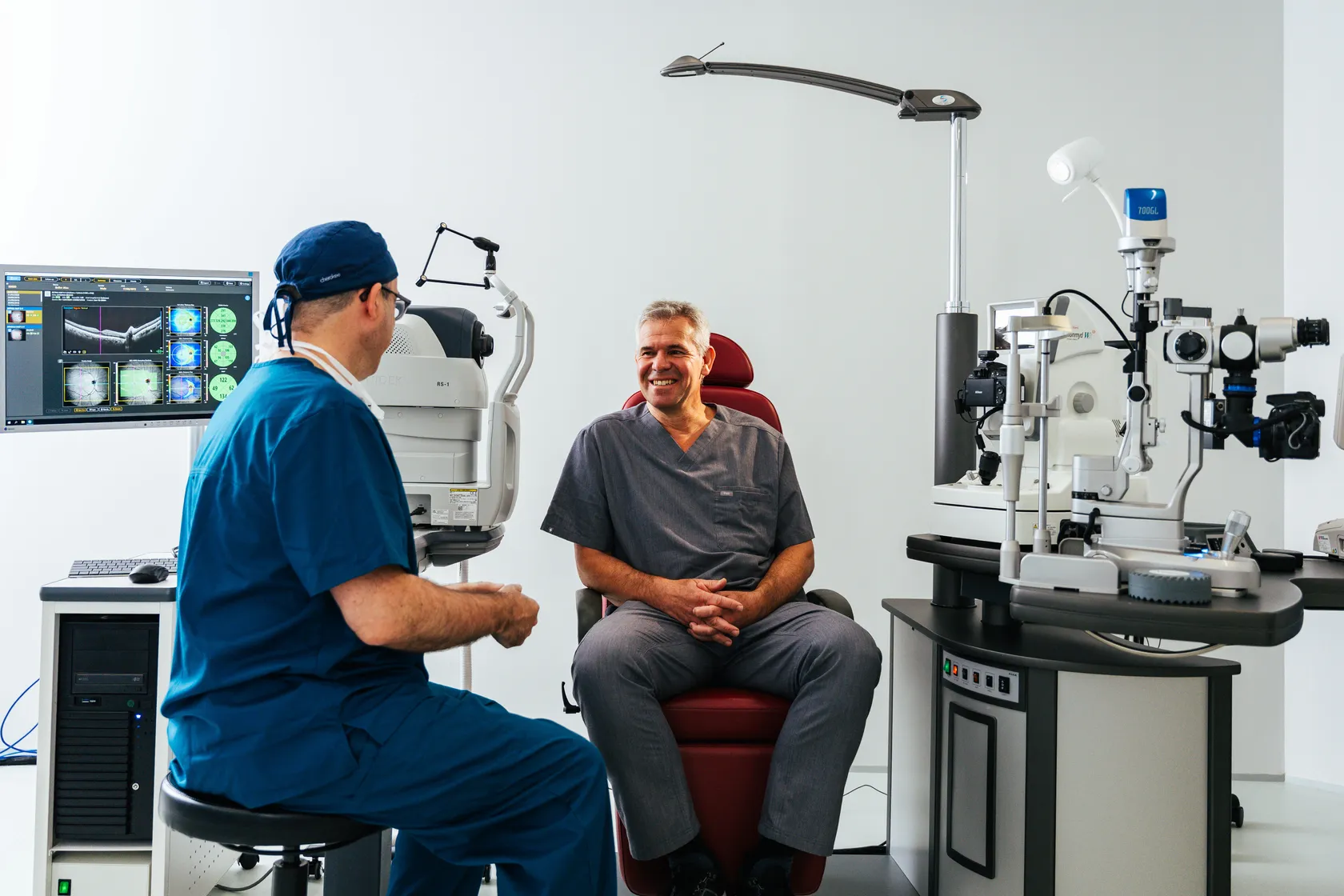
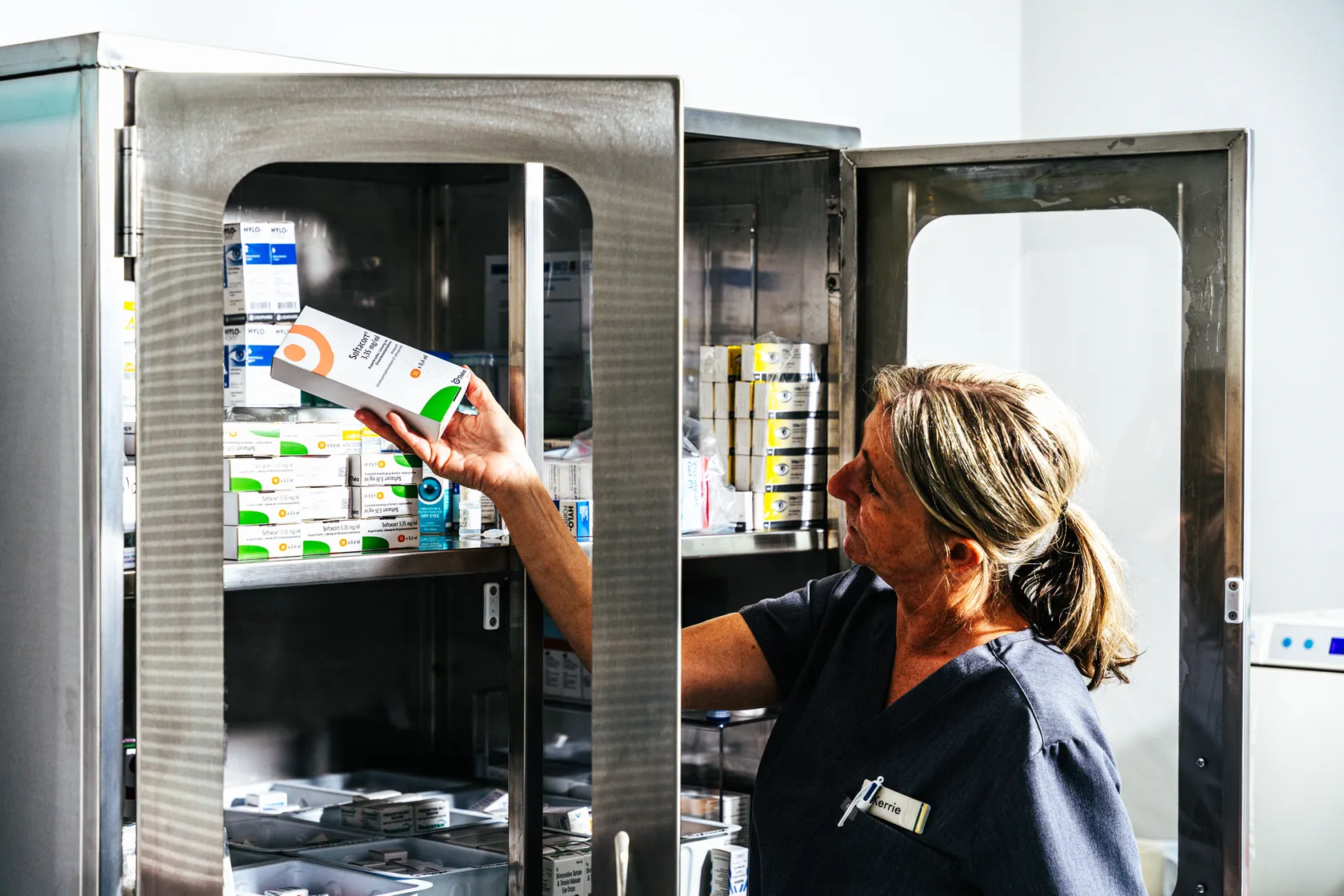
Running an eye clinic involves a lot of decisions. There are over 100 items used in a cataract operation, and every one needs to be purchased, stored and the inventory tracked. Environmental impact is part of that decision-making here. The cumulative effect of many small choices has compounded into some interesting results: on average, less than 1 kg of waste is produced per 100 appointments.
What may be surprising is that clinical standards have gone up and costs have come down at the same time. The reason is a simple one. A system designed on single-use items is designed to have a lot of what it pays for coming back out of it. A system designed to retain its resources does not. One of these will grow stronger faster than the other.
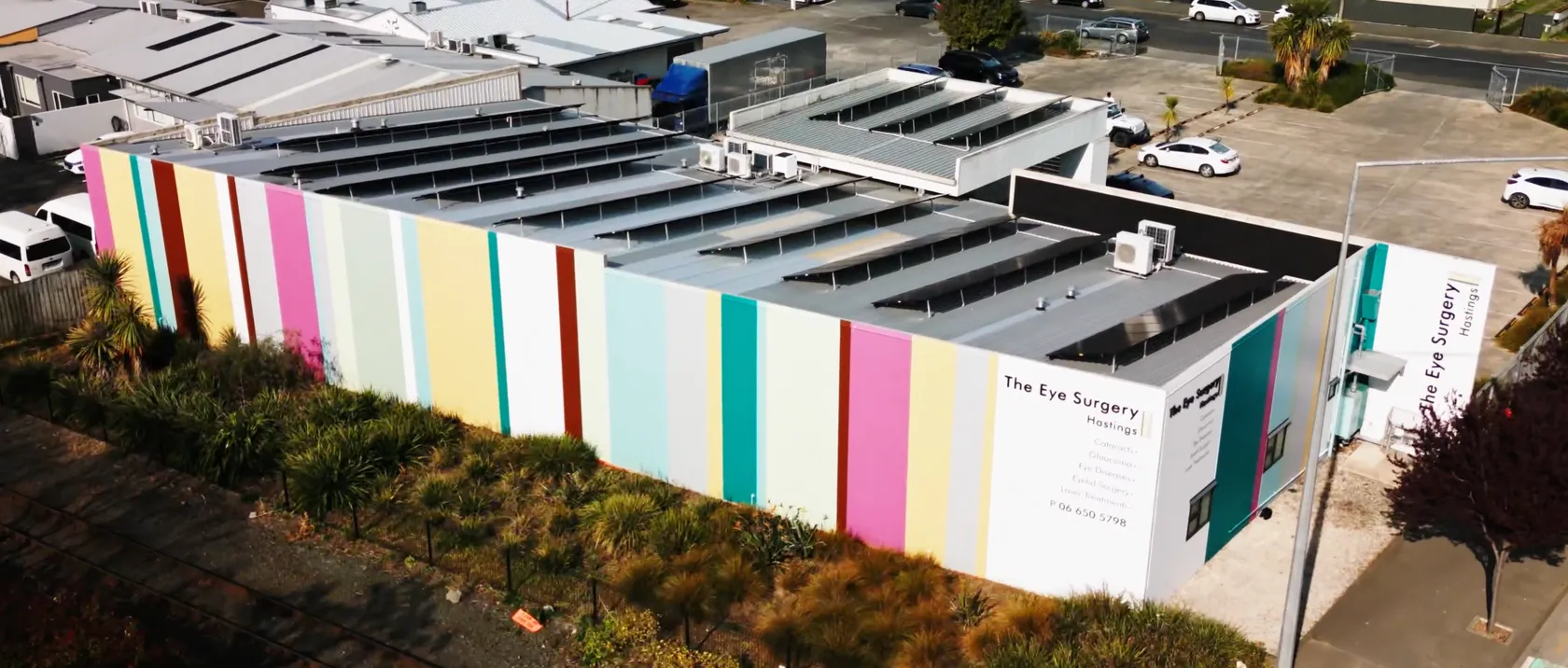
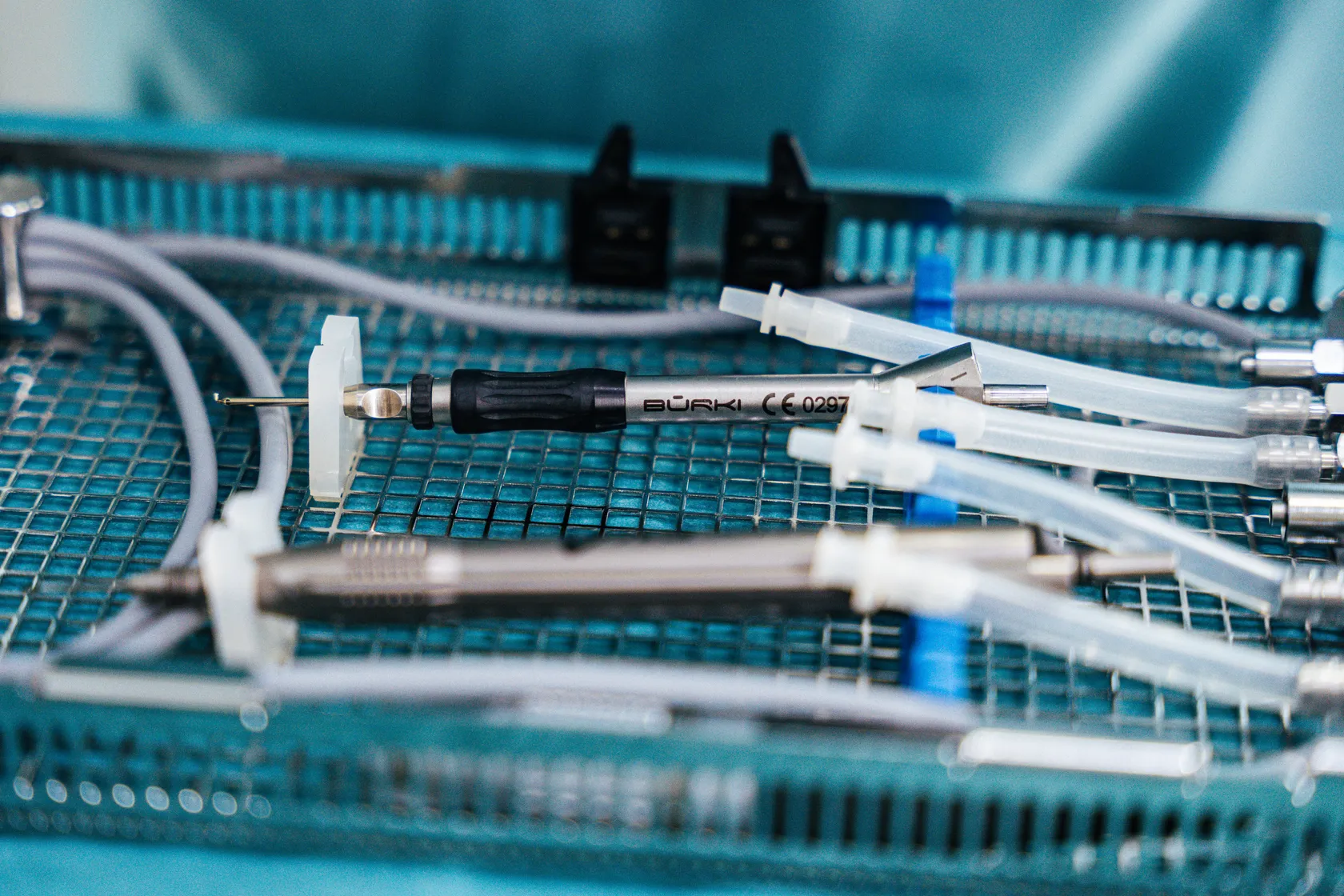
The operating theatre at The Eye Surgery runs on batteries. Not as a backup — as the primary supply. Solar panels on the roof feed into those batteries continuously, and the building's own battery system sits behind them. The grid is fourth in line. When a Hastings power cut happened during an operating session, nothing happened in the operating theatre. Nobody knew until a conversation later in the day. The solar installation generates approximately 150% of the building's total electricity needs, and surplus power goes directly to the local electricity grid, shared with the local community. Power bills here can be negative. The free electricity is used to sterilise reusable high quality surgical instruments, so all possible instruments are high quality.
The cleaning fluid used throughout the building is made on-site. It is non-toxic, non-allergenic, and leaves no volatile organic compounds in the air. No single-use plastic. No transport footprint. No hazardous waste disposal. No supply chain to fail. It is also more effective against bacteria and viruses than the agents it replaced, and costs less to use. It replaced a conventional product not because the clinical standard needed changing, but in response to the desire to use a safer, less toxic, and less wasteful alternative. Three questions about effectiveness, cost and workability, asked with an environmental focus, led to improvements without compromise. The cleaning protocol developed here has since been presented internationally.
Simple things can be some of the most effective. Energy-intensive processes are scheduled during daylight hours, when solar production is highest — making them both free and zero-emission simultaneously. Recycling is taken seriously enough to have a dedicated system for items that don't fit neatly into a standard category. Staff track environmental indicators together, and every member of the team is part of how the standard is maintained.
These are the more visible examples. The same questions have been asked of every supply, every process, and every journey to and from this building — and the answers accumulate.
The people who built this practice came to healthcare already thinking this way. Most ideas don't survive the three filters — clinical standard, cost, workability — and that is as it should be. The ones that do have earned their place, and each one makes the foundation stronger for the next.
The Eye Surgery is certified Carbon Positive — 125% of its carbon footprint is offset through planting native New Zealand trees in New Zealand parkland, including an offset for every patient's journey to and from the clinic calculated using current New Zealand government emissions figures. It holds B-Corp certification, independently assessed against social and environmental standards. In the first ten years of the Healthcare Climate Challenge — the largest sustainability assessment in healthcare — only three facilities globally have ever held the gold standard in every category in a single year. The Eye Surgery alone has done it twice. In 2023, it was named the Pacific Climate Champion by Global Green and Healthy Hospitals, recognised alongside leading institutions from across the world. Dr Alex Buller sits on the RANZCO Sustainability Committee — the ten-person body that sets the sustainability direction for ophthalmology across Australia and New Zealand.
We are grateful to be able to do this work here.
Precision care that's personal.